In Serbia, a growing demand for donkey milk is driving an increase in dairy donkey farms. This paper describes the demography and management practices at dairy donkey farms in Serbia using semi-structured face-to-face interviews with their owners. Additionally, microbiology of raw donkey milk was conducted to assess its hygienic quality and safety. The results show that most owners were male, aged over 51, who had not participated in dairy farming training courses (8/9; 88.89%). Most of the farms were located in North Serbia; they were family-run, with more than 20 animals in the herd. At the farms, straw was predominantly used as bedding material. Inadequate bedding hygiene and shelter dustiness were reported in 22.22% and 55.56% of the farms, respectively. Only two owners reported undertaking disinfection procedures for shelters or stables. All donkeys were fed hay supplemented with corn or oats, while wheat bran was provided at two farms. Healthcare measures such as vaccination and dental care were not carried out at the investigated farms, while deworming had never been performed on four of them (44.44%). The most common reported health problems were sudden death, abortion, stillbirth, and laminitis. Fore-milking was not performed on any of the farms. The post-milking procedure involved filtering through cotton gauze, packing in plastic bottles, and then refrigerating and/or freezing the milk, to be later sold at the farm. Presence of food-borne pathogens in raw donkey milk was not detected. Our results could help identify the key problems in country-specific donkey dairy management.
INTRODUCTIONDonkey husbandry in Serbia is deeply embedded in the country’s cultural, economic, and social fabric. Historically, donkeys served as working animals in rural communities and nowadays they hold a symbolic value in the Serbian folklore where they are portrayed as humble and loyal figures. In addition, raw donkey milk has traditionally been used as a natural remedy, particularly for respiratory conditions such as asthma and bronchitis (
1).
Agricultural mechanization significantly reduced the practical value of donkeys, leading to a decline in their population after the Second World War. Today, only a limited number remain, primarily in specialized herds for milk production. According to the data from the most recent Agricultural Census in 2023, a total of 2.380 donkeys, hinnies, and mules were registered in Serbia (
2). Conservation programs have established breeding centers in regions such as Sremska Mitrovica, Stara Planina, and Kovilj to preserve genetic diversity and reestablish sustainable management systems (
3).
The Balkan Donkey is the predominant breed in Serbia, managed mostly at smallholder farms under semi-extensive conditions. A distinct genetic and morphological population, the Banat Donkey, has also been identified in Serbia, and it may merit classification as a separate breed (
4). Its limited numbers emphasize the urgency for targeted conservation measures.
In recent years, the growing interest in donkey milk, particularly due to its nutritional qualities and potential in managing cow-milk protein allergy (
5), has led to a gradual resurgence of donkey farming in Serbia (
6). Despite this trend, farm management systems differ widely, and concerns have been raised about animal welfare (
7) and public health risks associated with the sale of raw milk (
8).
The research on donkeys in Serbia has so far been primarily focused on morphological, biochemical, hematological, and genetic characterization (
4,
9), as well as on-farm welfare conditions (
7). A few studies have addressed the microbiological status and antimicrobial properties of donkey milk (
1,
10). However, detailed information on farm-level management practices remains scarce.
In this study, we hypothesized that differences in farm management practices among dairy donkey farms and the demographics of the owners, are associated with variation in milk hygiene, animal welfare, and overall dairy donkey performances. This working hypothesis guided the development of the survey and the analytical framework of our research. Therefore, the aim of this study was to examine the current dairy donkey management practices in Serbia. Considering the fact that in Serbia there are no specific regulatory criteria for donkey milk, we also conducted microbiological analysis to assess hygienic quality and safety of the milk.
MATERIAL AND METHODS
Ethical approval
The participation in this study was voluntary with confidentiality of information. The authors followed the Law on Personal Data Protection of the Republic of Serbia (RS) ensuring that data collected were processed in accordance with legal and ethical guidelines.
The study received approval from the Ethical Committee of the Ethical Committee of the Faculty of Veterinary Medicine, University of Belgrade, RS. In accordance with the Serbian Animal Welfare Law, authorization was obtained from the Ministry of Agriculture, Forestry, and Water Management, RS (Permit No. 323-07-07930/2022-05).
Data source: Farms
Livestock statistics in Serbia do not list donkeys as a separate category; instead, they are grouped with horses, mules, and hinnies in the Register of Agricultural Holdings. As subsidies for donkeys apply only to genetic resource preservation and not milk production, the Register lacks specific data on farms specialized in donkey dairying.
Contact information for dairy donkey farmers was obtained through local authorities, colleagues from the Farm and Field Veterinary Service, and comprehensive internet searches using keywords “dairy donkey farms,” “donkey milk,” “donkey breeding,” and “Serbia”. Therefore, farms were selected using a convenience sampling approach. We visited nine dairy donkey farms, out of which eight were family holdings, and one was company- owned in the period between March and September 2024. Farmers were contacted by phone, informed about the project, and invited to participate by completing a questionnaire, with verbal consent obtained. All the farms were subsequently visited in person by the research team.
Data collection
Semi-structured interviews were used to collect information from the farmers. Responses were recorded in a questionnaire format by the interviewer. The questionnaire comprised 54 questions and contained sections on the demographics of the owners; farm characteristics and general on-farm management practices; dietary management; health management; on-farm milking management, milk processing and storage; milk distribution and marketing. During the farm visit, the authors evaluated bedding hygiene and shelter/ stable dustiness. The hygiene of the bedding material was evaluated according to the AWIN welfare assessment (
11). Ventilation in the stables was taken into account in the subjective evaluation of barn air quality.
Milk sampling
Milk samples were collected from clinically healthy Domestic Balkan jennies during morning manual milking. The animals were 3.5–9 years old, with the mass of 150–200 kg, and were 30–200 days postpartum. Foals were separated 6–12 h before milking, usually with visual contact maintained.
Udder preparation varied: at most farms, the udder was washed with lukewarm water and dried with a shared cloth or paper towel, while on three farms, no preparation was performed; on one farm teats were wiped with a napkin. Fore-milking was not practiced, but the first streams were discarded before hand-milking into clean plastic jugs. Milk was filtered through gauze, transferred into sterile bottles, refrigerated at 4 °C, and transported to the laboratory. Sampling was not possible on one farm with no lactating jennies. In total, 36 samples were collected from eight farms.
Microbiological analyses
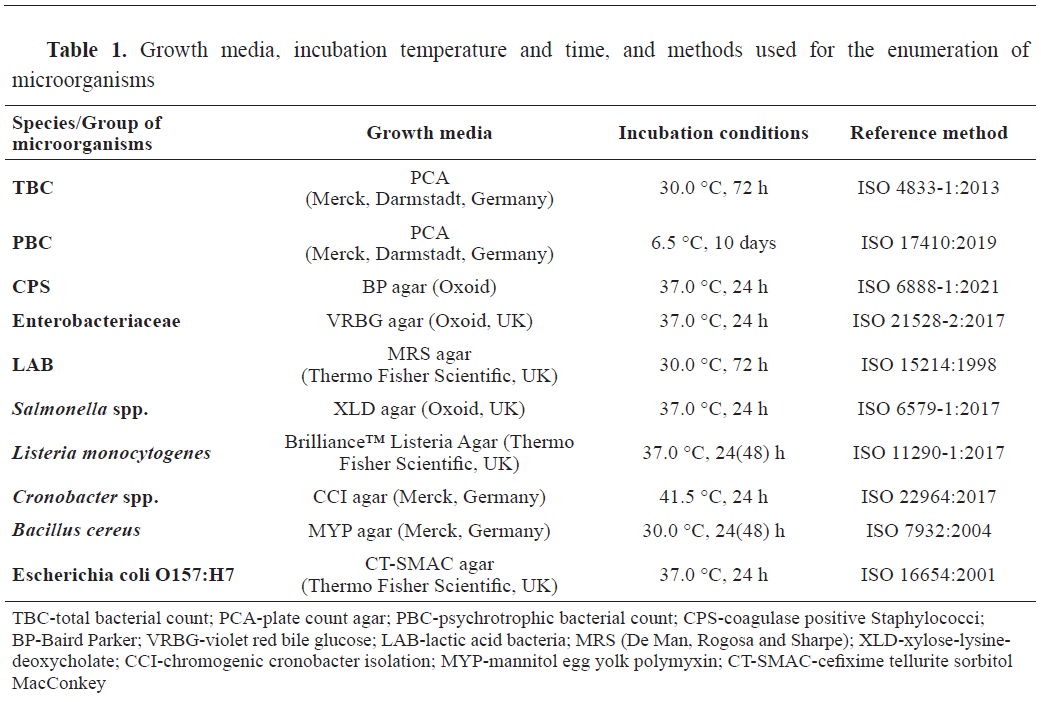
The following microbiological analyses were performed: total bacterial count (TBC), psychrotrophic bacterial count (PBC), coagulase- positive staphylococci (CPS), Enterobacteriaceae, lactic acid bacteria (LAB),
Salmonella spp.,
Listeria monocytogenes,
Cronobacter spp.,
Bacillus cereus, and
Escherichia coli O157:H7. The growth media, incubation time/temperature, and specific method used for each group/species of targeted microorganisms are shown in Table 1. All the analyses were done in triplicate.
Statistical analysis
The data were exported and analyzed using descriptive statistics of the statistical package GraphPad Prism Software, Version 9.00 (GraphPad, Inc., Boston, MA, USA). The bacterial counts, determined by the colony count technique and expressed as CFU/mL, were log
10 transformed to normalize the distributions before calculating the arithmetic means and standard deviation of these transformed counts. The qualitative data were narrated and explained logically based on the existing condition and literature.
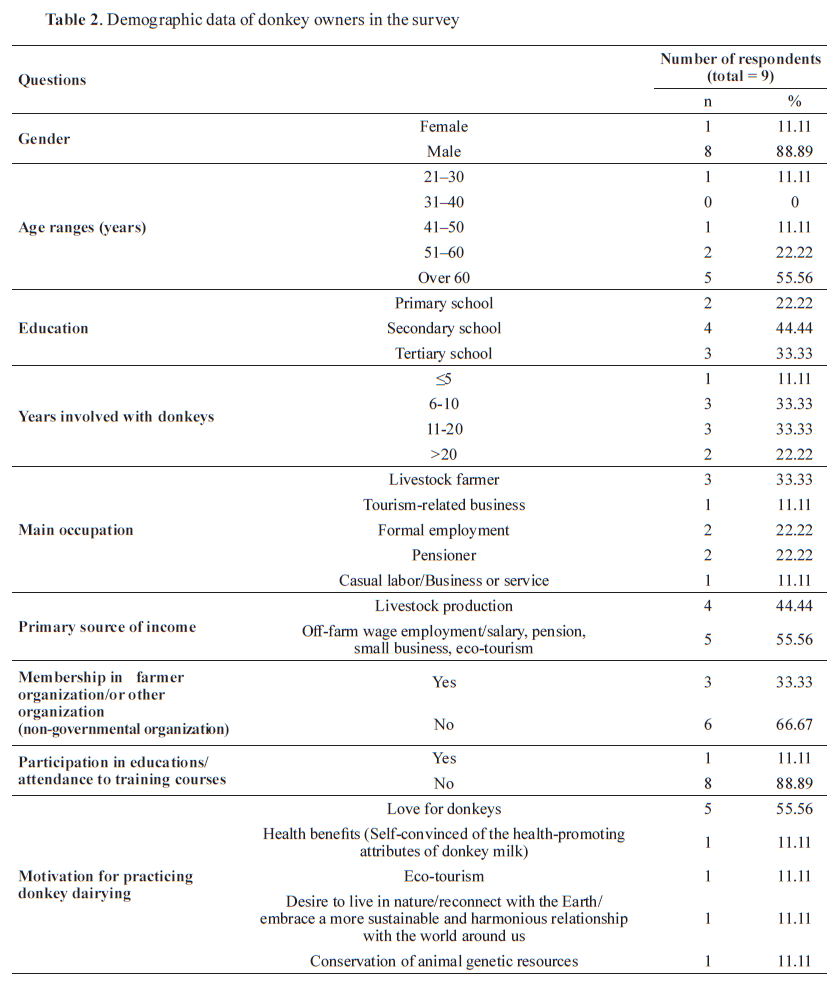
RESULTSA total of nine donkey owners completed the survey.
Table 2 shows that most farm owners were male, over 51 years old, and held a secondary school degree. More than half had over a decade of farming experience, though only a minority reported farming as their primary occupation. Many relied on off-farm income sources such as pensions, ecotourism, or salaries, with donkey milk serving as a complementary income. Few were members of farmer organizations, and most had not attended training courses. The main motivation for keeping donkeys was strong personal affection and the wish to promote their value and improve their public image.
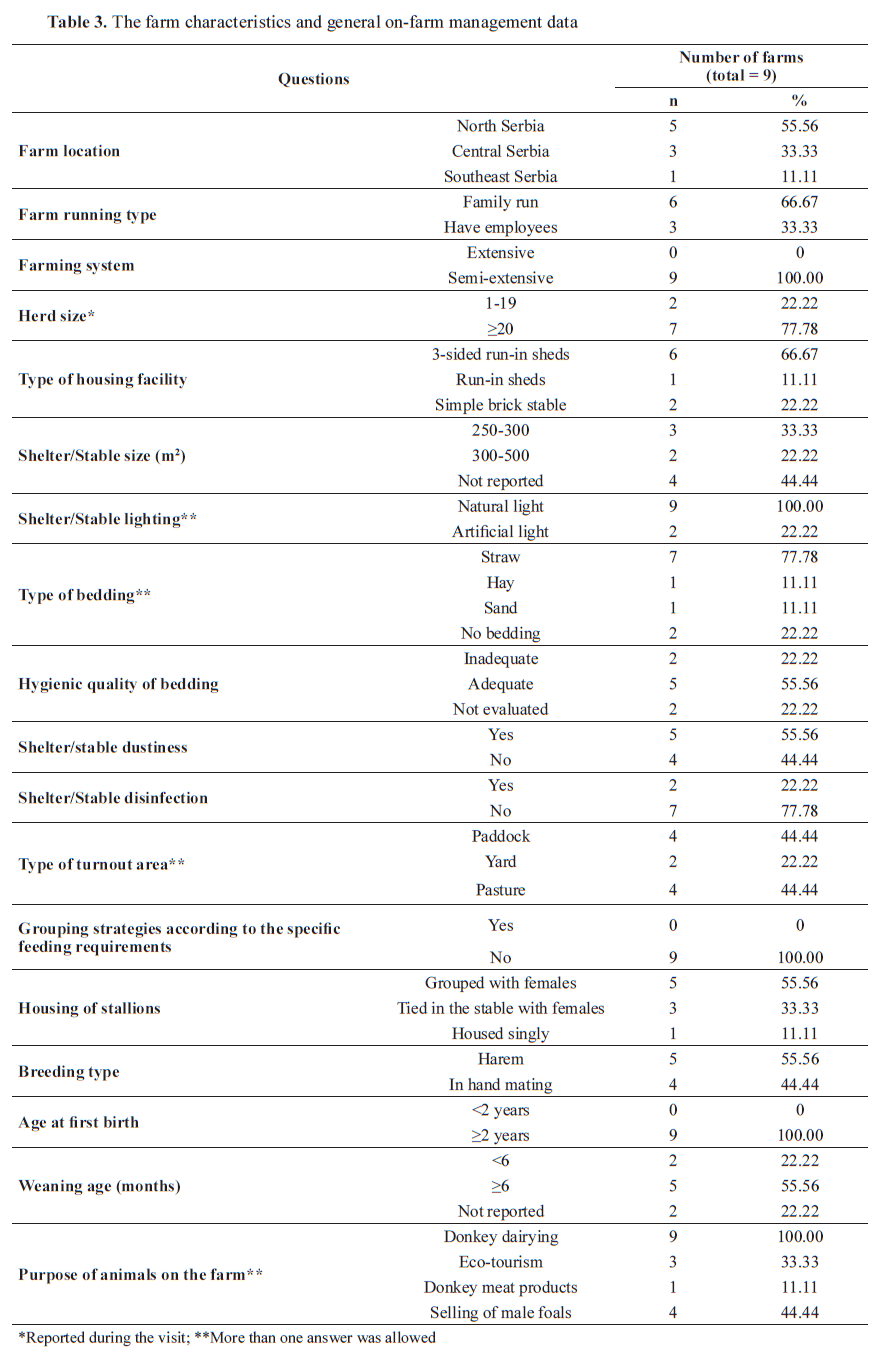
At the investigated farms, 572 donkeys were housed. Over half of the farms were located in northern Serbia, and most were family-run, with medium to large herds ranging from 15 to 250 donkeys, predominantly females. The Domestic Balkan donkey was the principal breed, with a few Banat donkeys. The farms practiced semi-extensive management, often providing seasonal pasture access and housing donkeys in three-sided sheds under natural light. Straw bedding was common, though hygiene practices were inconsistent; dustiness was frequently observed, and disinfection was rarely carried out. Feeding was not tailored to age, sex, or production stage. Stallions were usually kept with jennies, and harem breeding was the prevailing system, with first foaling after two years and weaning typically after six months. The primary purpose of rearing was milk production and processing, while some farms also sold male foals, offered recreational services, or engaged in meat production (
Table 3).
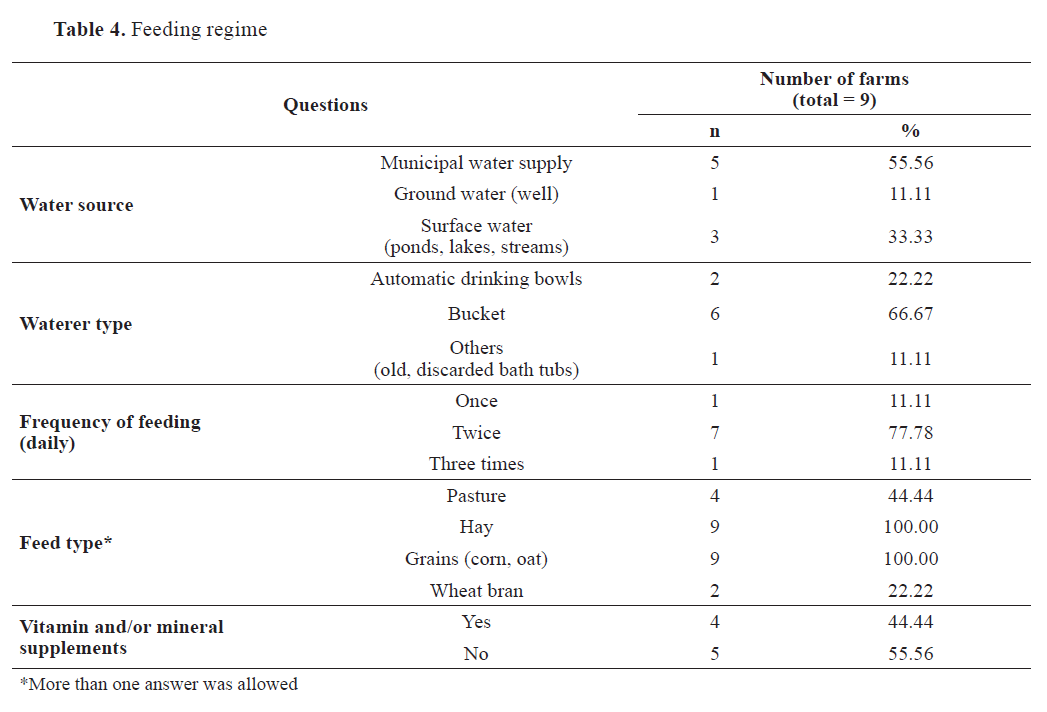
Donkeys had free access to water at all farms (
Table 4). Most drank from buckets, while a few farms used automatic drinkers. Water sources included wells, springs, or, most commonly, the public supply system. The diet consisted mainly of hay, predominantly clover, along with grains such as maize, oats, wheat, or wheat bran. Forage was typically provided twice daily, and during the dry season, some farms allowed free grazing on natural pastures. Mineral or vitamin supplements, usually in the form of mineral blocks, were commonly provided in less than half farms.
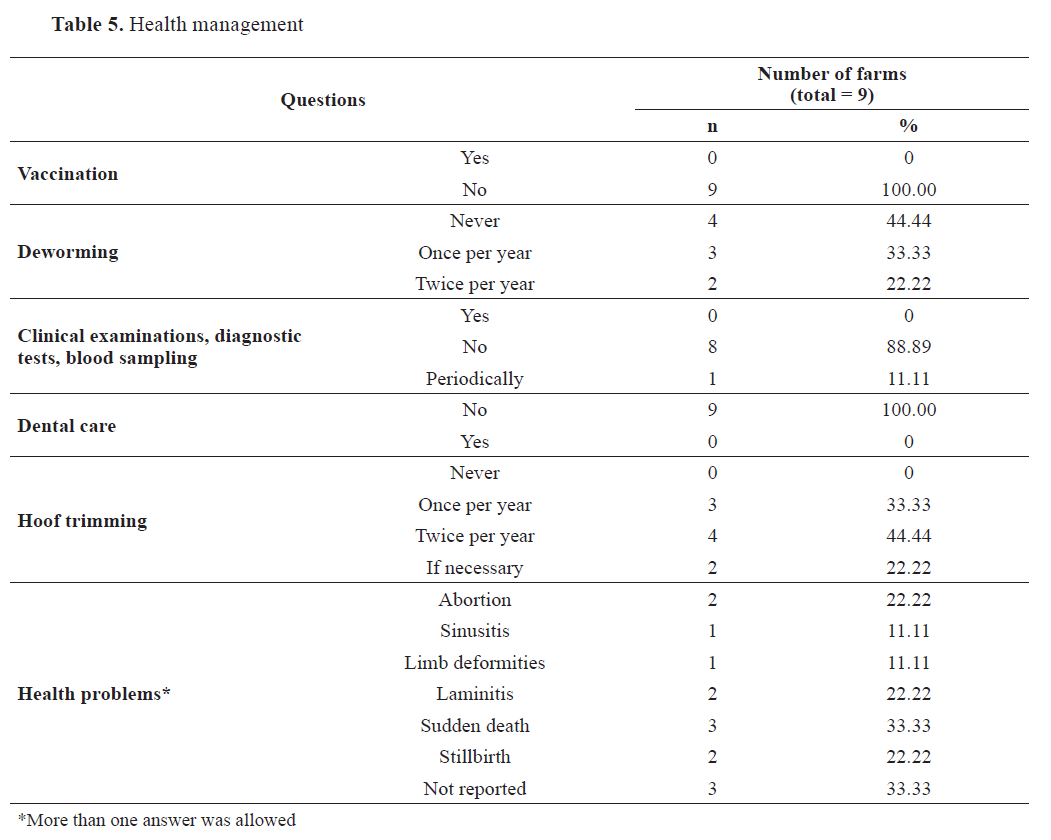
Routine healthcare practices and common health problems are summarized in
Table 5. None of the donkeys had been vaccinated or received dental care. At nearly half of the farms, animals had never been dewormed, while others carried out deworming once or twice a year, occasionally limited to foals or non-lactating jennies. Hoof trimming was usually performed once or twice a year, though at some farms, it was done only when needed; all owners reported hood trimming on their own. Clinical examinations and diagnostic testing were rarely performed. The reported main health problems included sudden death, abortion, laminitis, and stillbirths.
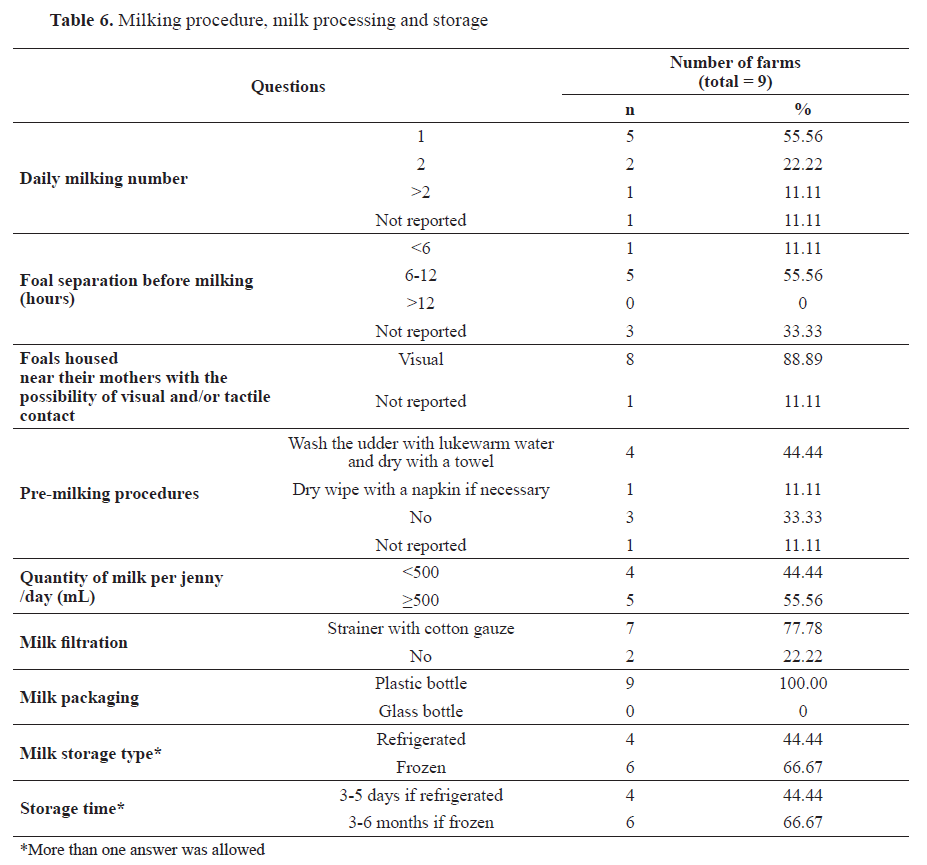
On-farm milking practices are summarized in
Table 6. None of the farms had a designated milking area, and all relied on manual milking, most commonly once per day. Fore-milking was not practiced. Pre-milking hygiene varied: at some farms, no udder preparation was carried out, while others washed the udder with lukewarm water and dried it with a communal cloth, or less commonly, used a dry wipe. Daily milk yield per jenny typically exceeded 500 mL. Jennies and foals were usually separated for 6-12 h before milking, with visual contact maintained at nearly all farms. In post-milking, milk was generally filtered through gauze, though a few farms did not filter. The storage practices also differed: some refrigerated milk for sale within 3–5 days, while others froze it at −20 °C or used rapid freezing at −40 °C, extending shelf life to 3–6 months.
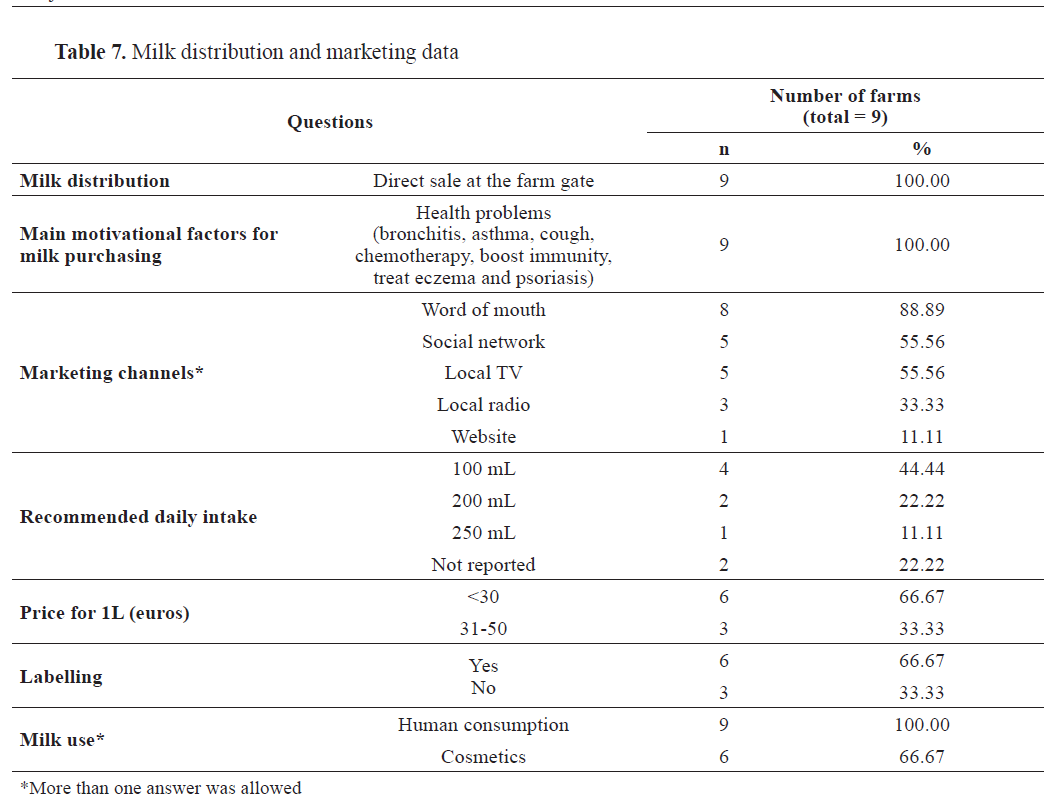
Milk distribution and marketing practices are summarized in
Table 7. The main sales channel was direct farm-gate sale, most often to families with young children and infants. Consumers primarily sought donkey milk for its perceived health benefits, particularly for respiratory, digestive, and skin conditions. Marketing relied almost exclusively on word of mouth. The typical price was around €30 per liter. All farms produced milk for human consumption, and many also collaborated with galenic pharmacies to produce skincare products such as soaps and creams. Product labeling was common, and the recommended daily intake reported by farmers ranged from 100 to 250 mL.
The safety status of raw donkey milk was assessed by monitoring for presence of
Salmonella spp.,
Listeria monocytogenes,
Cronobacter spp.,
Bacillus cereus and
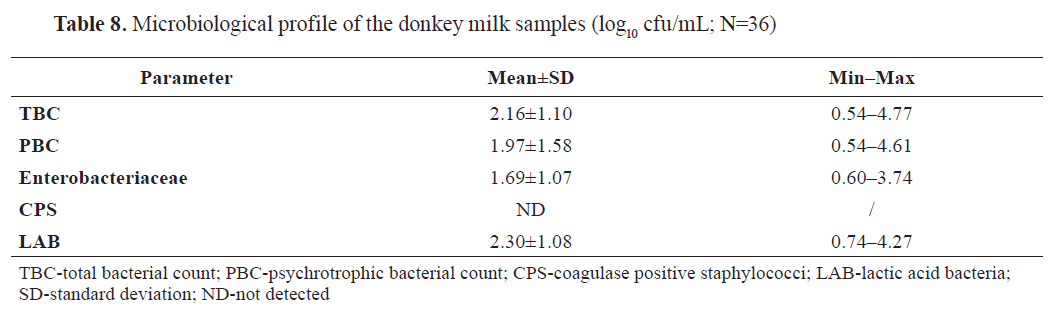
Escherichia coli O157:H7. None of the targeted pathogenic microorganisms were found in any of the analyzed milk samples. The microbiological results of the 36 donkey milk samples for TBC, PBC, Enterobacteriaceae, CPS, and LAB are presented in
Table 8. Total bacterial count was in range 0.54 and 4.77 log cfu/mL. The mean value of PBC and Enterobacteriaceae was 1.97 and 1.69 log cfu/mL, respectively. Coagulase-positive staphylococci were not detected. The average count of lactic acid bacteria was 2.30 log cfu/mL.
DISCUSSION
This survey showed that donkey farm owners in Serbia were motivated by personal enthusiasm rather than formal training in dairy farming. Housing, feeding, healthcare, and milking practices were largely based on experience and intuition rather than standardized guidelines. Nevertheless, microbiological testing revealed no pathogens in raw milk, indicating that these management systems can still ensure satisfactory milk safety.
Most donkey farm owners were male, well- educated, over 51 years old, and had bred donkeys for more than 11 years. Similar gender and age patterns were reported in China (
12). These findings are consistent with national statistics, as the latest Agricultural Census (
13) showed that 77% of agricultural managers were male and 69.23% were over 56 years old. In Serbia, livestock management has traditionally been a male role. The predominance of older farm holders reflects rural depopulation, aging, and migration, with long-term effects on productivity and innovation. Serbia shares these challenges with the EU, where 57.6% of farm managers are 55 or older (
14). The relatively high education level of donkey owners in this study is encouraging, since they are more likely to adopt new technologies and innovative practices, while being generally more risk-averse.
For many smallholders, joining farmers’ organizations mainly offers visibility to attract external support. One farm owner was a member of the Cattle Breeders Association, focused on conserving endangered breeds with traditional methods, while two others belonged to a non- governmental organization that has driven major conservation initiatives in Serbia. Although local breeders recognize the potential of dairy donkeys, government support remains limited, leaving husbandry dependent on individual enthusiasts.
At the investigated farms, donkeys were kept semi-extensively, with four farms providing seasonal pasture (April–November), which enhances welfare by allowing natural behaviors (
12). All farms offered shelters with free access during bad weather; it is essential because donkey coat is less waterproof than horses’ one (
15). Straw was the most common bedding, consistent with previous studies (
16,
17), and considered the safest for ingestion though it carries risks of dust and spores (
18). Poor bedding hygiene and dusty shelters were noted in 22.22% and 50% of the farms, respectively, posing risks of respiratory and hoof problems (
19,
20). Only two farmers reported disinfecting shelters, despite their importance in controlling infectious diseases (
21).
Donkey diet should be based on high-fiber, low- energy forages (
22). Our study shows that donkeys in Serbia are fed hay with grain supplements (corn, oats), while two farms also used wheat bran. Hay is the primary forage for donkeys in Europe (
16,
17), whereas straw predominates in Northeastern China (
12).
Most farmers lack education on donkey healthcare, including vaccination, dental care, deworming, and hoof management, highlighting the need for regulation in line with the EU Platform on Animal Welfare (
23) and Animal Health Law (
24). Donkeys in Serbia are exposed to typical equine pathogens (
25), and owners reported sudden death, abortion, laminitis, and stillbirth as major health issues. Hoof trimming was performed only once or twice a year, much less frequently than the recommended interval of 6–8 weeks, likely contributing to laminitis, a globally prevalent and painful welfare concern (
20).
Although donkey dairy farming is growing in the EU, no specific legislation exists. Guidelines issued in 2017 (
6) recommend hygienic milking procedures, veterinary oversight, and pre-milking steps, udder inspection, fore-milking, washing, and drying, to ensure milk hygiene and detect abnormalities (
26). Our survey shows that foals were separated 6–12 hours before milking, allowing visual contact; however, fore-milking was not performed, limiting early detection of mastitis. Communal teat drying was used by nearly half of the farmers, a practice discouraged due to disease risk (
27). Daily milk yield per jenny exceeded 500 mL on more than half of the farms, and is influenced by breed, management, feeding, lactation stage, and milking procedures (
28).
Milk was filtered, bottled, and sold raw at the farm gate, reflecting common European practice (
29), but raising food safety concerns due to inconsistent hygiene and labeling. National regulations require labels stating: ‘Raw milk. Use after cooking’ (
30), yet compliance was inconsistent, and some farms made unverified health claims such as ‘donkey milk strengthens the immune system’. Donkey milk health benefits have not been rigorously verified (
31). Consumer perceptions of food risks are often shaped more by emotion than by science (
32). Therefore, governments must enforce food safety regulations and provide accurate, reliable information rather than relying solely on individual perceptions.
Good dairy practices, hygiene, and milk handling strongly influence the microbiological quality of donkey milk. While this study found no foodborne pathogens, the target consumers,infants, young children, and immunocompromised adults, warrant stricter official control (
8). There is no evidence that raw milk is nutritionally superior to pasteurized milk (
33), and currently, no safety standards exist for donkey milk.
The total bacterial count is currently used both as hygienic marker and indicator of product shelf- life. The observed low TBC count in the present study was in accordance with previous studies (
34,
35) and in compliance with the European legislation (
36). The low bacterial count in donkey milk with low mastitis prevalence (
34) is due to several factors: semi-extensive farming reducing pathogen transmission, equid udder’s anatomy limits contamination (
37), frequent milking with teat washing (
38), and antimicrobial components like lysozyme, abundant in donkey milk, contribute to its favorable microbiological quality (
28).
Gram-negative psychrotrophic microorganisms represent the dominant microbiota of raw donkey’s milk, with
Pseudomonas spp., being the most abundant (
39). Psychrotrophic members of genus
Pseudomonas are considered to be among the species responsible for donkey milk spoilage and thus for limiting its shelf-life (
40). The average count of psychrothrophic bacteria in the present study was found to be 1.97 log cfu/mL. Our results are in the agreement with previous studies (
35,
41).
Enterobacteriaceae
, as common environmental organisms, are good indicators when monitoring environmental conditions and overall farm hygiene. The Enterobacteriaceae count in the present study (1.69 log cfu/mL) was in line with other literature reports (
35,
42).
In the present study, coagulase-positive staphylococci count was below the detection limit (1 log cfu/mL). A particular safety concern has been identified with the isolation of methicillin-resistant staphylococci from the donkey milk in Italy (
43), which can be seen as a potential source of community-acquired MRSA. This finding highlights the need for strict hygiene practices during milking and adequate microbiological monitoring, especially considering that raw donkey milk is increasingly being consumed by sensitive consumer groups.
Donkey milk could provide a novel source of LAB strains with biotechnological potential (
44). The present study revealed mean LAB counts of 2.30 log cfu/mL. The donkey milk from Piedmont farms was characterized by a higher overall LAB mean of 4.20 log cfu/mL (
45), which is consistent with findings reported by Carminatti et al. (
44).
The study limitation: It is important to note that this study relied on self-reported management practices, which may impose a degree of response bias. There is also the possibility that some respondents provided socially desirable answers, potentially affecting the accuracy and objectivity of part of the results. Another limitation of this study pertains to the use of a convenience sampling approach, which may restrict the generalizability of the study results. Nevertheless, this method was considered appropriate given the study’s exploratory character and the logistical constraints involved.
CONCLUSIONIn conclusion, this study demonstrates that dairy donkey farming in Serbia is characterized by suboptimal hygiene practices, insufficient preventive health care, and a lack of formal farmer training, although no analyzed microbiological hazards were detected in raw donkey milk samples. These findings highlight the need for targeted farmer education and basic farm management and milk hygiene guidelines. Furthermore, the present study offers a valuable evidence base for developing national regulations on donkey milk production and commercialization, supporting informed policymaking.
CONFLICT OF INTEREST
The authors declare that they have no financial or non-financial conflict of interest regarding authorship and publication of this article.
ACKNOWLEDGMENTS
This work was supported by the Ministry of Education, Science and Technological Development of the Republic of Serbia (Contract number 451-03-34/2026-03/200143). Special thanks to Dr. Tijana Ledina (Faculty of Veterinary Medicine, University of Belgrade) for her technical assistance during data collection.
AUTHORS’ CONTRIBUTION
SB made the conceptualization, investigation, writing of the original draft, writing-review and editing, data curation and supervision. MKF, MK and ED were involved in writing–review and editing. JL was included in writing–review and editing and formal analysis. KN took part in writing of the original draft, writing–review and editing, data curation and supervision.


 10.2478/macvetrev-2026-0014