Antimicrobial use (AMU) in companion animals is influenced not only by veterinary prescribing practices but also by pet owners, whose decisions on medication administration, compliance, and expectations can impact antimicrobial stewardship and antimicrobial resistance (AMR) at the human–animal interface. This study aimed to assess pet owners’ knowledge, attitudes, and practices regarding AMU and AMR in companion animals in North Macedonia. A cross-sectional, web-based questionnaire was completed by 410 pet owners in North Macedonia. Data was analysed using descriptive and inferential statistics. Of the respondents, 96.3% (395/410) acknowledged AMR as a serious health challenge, indicating high general awareness. However, this awareness did not consistently translate into accurate knowledge and recommended practices. For example, while 92.4% (379/410) identified bacteria as a target of antibiotic therapy, only 67.1% (275/410) chose bacteria as the only correct answer. Regarding interspecies transmission, 66.6% (273/410) agreed that companion animals may transmit antimicrobial-resistant bacteria to humans, while 60.2% (247/410) were previously aware of such transmission. Trust in veterinarians was high, but 36.1% (148/410) of respondents still expected antibiotic therapy for a wide range of clinical conditions. Additionally, 44.1% (181/410) reported administering antibiotics intended for human use to their pets, and 62.9% (258/410) reported keeping antibiotics at home “just in case.” Knowledge of bacteriological testing was associated with adherence to the prescribed treatment duration. These findings indicate that, despite high general awareness of AMR, important gaps remain in pet owners’ specific knowledge and practices. Pet owners should be considered an important target for antimicrobial stewardship efforts in small animal practice in North Macedonia.
Antimicrobial use (AMU) is a recognised driver of antimicrobial resistance (AMR), and human behaviour plays a central role in prescribing, dispensing, and consumption practices across medical disciplines, including veterinary medicine (
1, 2). While the majority of veterinary antimicrobials are used in food-producing animals, companion animals such as dogs and cats are increasingly recognised as potential reservoirs of antimicrobial-resistant bacteria due to their close contact with humans and the potential for interspecies transmission (
3, 4).
A major concern in small animal practice is the frequent use of antimicrobials outside approved label directions, known as extra-label or off-labeluse (
5). This practice is considerably more common in companion animals than in food-producing species. The main reasons are the limited number of antimicrobial products specifically authorised for pets and the presence of outdated or non-specific dosing guidelines (
6). In the United States, extra-label antimicrobial use is legally allowed under veterinary supervision. In contrast, the European Union enforces stricter regulations, especially for critically important antimicrobials (CIAs) for human health (
7). Although the overall volume of antimicrobial use in companion animals is lower than in livestock, the use of critically important antimicrobials (CIAs) remains an important stewardship concern in small-animal practice (
8, 9). In North Macedonia, our previous survey among small-animal veterinarians identified frequent prescribing of CIAs alongside limited implementation of bacteriological and antimicrobial susceptibility testing (
10). However, the selective pressure exerted by the use of CIAs and human approved antimicrobials in pets remains a concern (
11). This is important because evidence suggests that companion animals may carry resistant bacteria of major public health importance. These include methicillin-resistant staphylococci, ESBL/AmpC producing
Enterobacterales, and carbapenem resistant Gram-negative bacteria, with potential exchange of resistant genes between humans and pets within the same household (
12).
In small animal practice, AMU is shaped by two key human actors: veterinarians, who are responsible for clinical decision-making and prescribing, and pet owners, who administer treatments, influence demand, and set expectations about antimicrobial therapy (
13). Although veterinarians remain authorised prescribers, their prescribing is shaped by veterinarian-, patient-, treatment-, and context related factors (
14). Both groups play key roles in AMU patterns in companion animals and are central to strategies that mitigate and control AMR (
15). Recent studies show that pet owners apply different antibiotic standards for themselves and their pets, often with less knowledge and poorer practices in the veterinary context (
16). Veterinarians also deal with clinical uncertainty, client pressure, and time constraints. These factors can lead to suboptimal prescribing, even when unnecessary (
17). Together, these dynamics stress the need to address both prescriber behaviour and owner understanding within the One Health framework.
Our recent survey among small-animal veterinarians in North Macedonia identified concerning findings regarding AMU, including frequent owner pressure to prescribe antibiotics and owner-administered antibiotics prior toveterinary consultation (
10). These findings suggest that pet owners may play an important role in shaping AMU in companion animals. However, data on pet owners’ knowledge, attitudes, and practices regarding AMU and AMR in North Macedonia are currently lacking. Addressing this gap is important, as pet owners may influence treatment expectations, adherence to prescribed therapy, and antibiotic useat the household level. Therefore, this study aimed to investigate pet owners’ knowledge, attitudes, and practices regarding AMU and AMR in order to inform antimicrobial stewardship efforts in companion animals in North Macedonia.
MATERIAL AND METHODSStudy design A cross-sectional, web-based survey was conducted among pet owners in North Macedonia from 25 August to 4 December 2025 to assess their knowledge, attitudes, and practices regarding AMU and AMR in companion animals.
Questionnaire development A structured questionnaire was developed specifically for this study. It included items on demographic characteristics, general understanding of antibiotics and AMR, trust in veterinarians, expectations regarding antimicrobial therapy, adherence to prescribed treatment, storage and use of antibiotics at home, administration of antibiotics intended for human use, and acceptance or refusal of bacteriological testing. The questionnaire consisted of 25 items, presented as single-choice questions, multiple-choice questions, Likert-type scales, and optional free-text responses. It was pilot-tested on five pet owners to assess clarity. An English version of the complete questionnaire, including all questions and response options, is provided as Supplementary Material
(https://data.mendeley.com/datasets/vprxjwfzy9/1).
Participants and recruitmentThe survey was administered via Google Forms and could be completed on a mobile device or computer, with responses automatically stored. Eligible participants included adults (18 years or older) who owned at least one pet. Recruitment was conducted online through social media platforms (Facebook and Instagram), online pet-owner communities, and the official social media pages of veterinary clinics that voluntarily shared the survey link. Additional recruitment was conducted at the University Veterinary Hospital of the Faculty of Veterinary Medicine – Skopje, where visitors were invited to participate by scanning a QR code displayed in the reception area. Participation was voluntary and anonymous. The survey settings limited responses to one submission per IP address to reduce duplicate entries. Informed consent was obtained from all participants prior to the initiation of the survey. No personal or sensitive data were collected.
Ethical statementThis questionnaire-based study did not involve any intervention, handling, or experimental procedures involving animals. Participation of pet owners was voluntary and anonymous, and informed consent was obtained before completion of the questionnaire. The collected data were used exclusively for scientific research purposes, and no personal or sensitive data were collected.
Statistical analysisData were entered and managed in Microsoft Excel and analysed using R statistical software (version 4.4.3; R Foundation for Statistical Computing, Vienna, Austria). Categorical variables are presented as absolute frequencies and percentages. Trust in veterinarians, measured on a five-point ordinal scale, is additionally summarised as median and interquartile range (IQR). Associations between categorical variables were assessed using Pearson’s chi-square test of independence or Fisher’s exact test, as appropriate. Associations between the ordinal trust variable and binary outcomes were examined using the Mann-Whitney U test. All tests were two-tailed, and p-values <0.05 were considered statistically significant. Given the exploratory nature of the study, no correction for multiple comparisons was applied. Three multivariable binary logistic regression models were fitted for the following outcomes: (1) belief that companion animals may represent a source of antibiotic-resistant bacteria transmissible between animals and humans; (2) adherence to prescribed antibiotic duration (dichotomised as “always” versus “not always”); and (3) agreement that antibiotics may be used without veterinary consultation. Candidate predictors were selected based on clinical relevance and bivariate screening and were entered using a forced entry approach. Results are presented as adjusted odds ratios (aORs) with 95% confidence intervals (CIs).Age was initially categorized into six groups (18–24, 25–34, 35–44, 45–54, 55–64, and >64 years), as presented in Table 1. To explore potential age-related differences across selected outcomes, these categories were subsequently combined into two broader groups (18–34 years and ≥35 years) and compared using the same bivariate approach. Model calibration was assessed using the Hosmer–Lemeshow goodness-of-fit test.
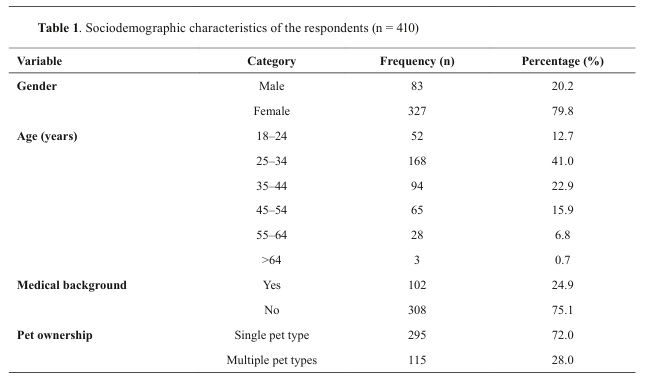
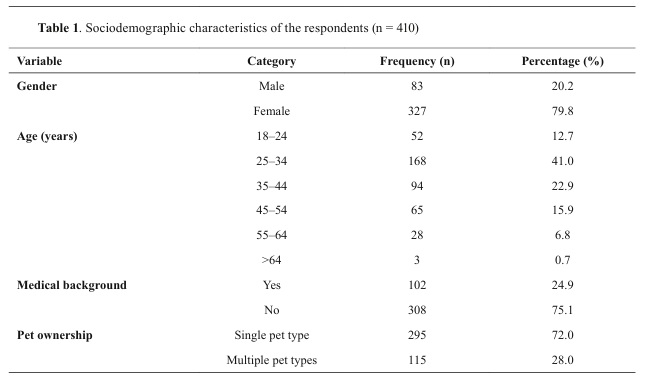
RESULTSSociodemographic data of the respondentsA total of 410 pet owners were included in the analysis. The sample was predominantly female (79.8%). The most common age group was 25-34 years (41.0%), followed by 35-44 years (22.9%). Approximately one quarter of respondents (24.9%) reported a medical or veterinary educational background. Most participants (72.0%) owned a single pet type, while 28.0% reported owning multiple pet types. Detailed sociodemographic characteristics are presented in
Table 1.
 KnowledgeKnowledge of antibiotics and antimicrobial resistance
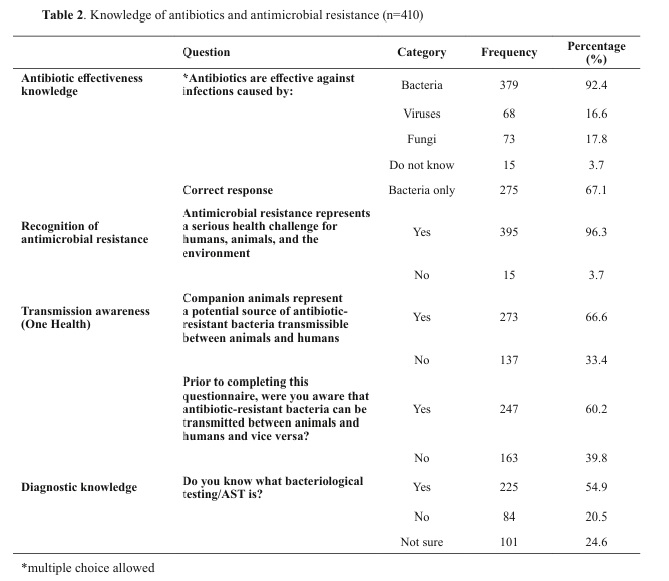
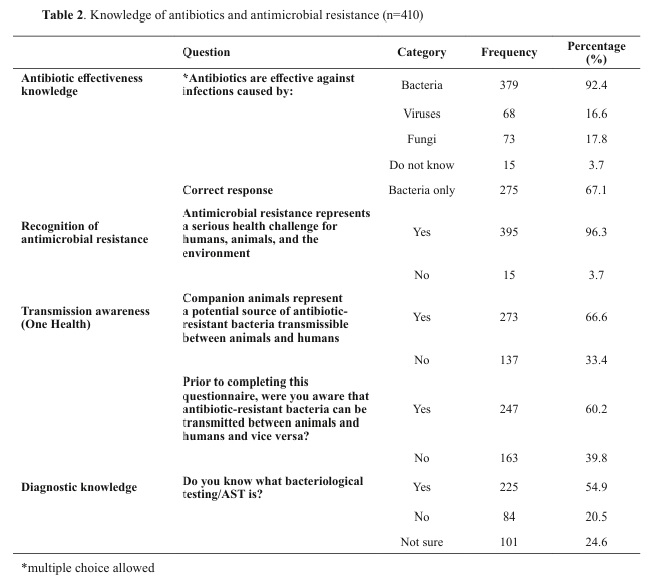
Most respondents (92.4%) selected bacteria as targets of antibiotic therapy; however, because multiple responses were permitted, 27.4% also selected viruses and/or fungi. Overall, 67.1% correctly identified bacteria only as the sole target of antibiotic therapy, as shown in
Table 2.
Almost all respondents (96.3%) recognized AMR as a serious health challenge affecting humans, animals and the environment. Regarding transmission awareness, 66.6% agreed that companion animals may represent a potential source of antibiotic-resistant bacteria transmissible between animals and humans. Prior awareness of interspecies transmission was reported by 60.2% of participants, whereas 39.8% indicated they were not aware of this possibility before completing the questionnaire. Knowledge of bacteriological testing/AST varied: 54.9% reported familiarity, 20.5% reported no knowledge and 24.6% were unsure. Knowledge-related findings are summarized in
Table 2.
 Attitudes Trust and communication with veterinarians
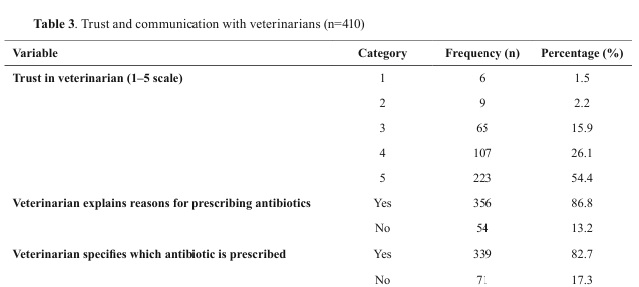
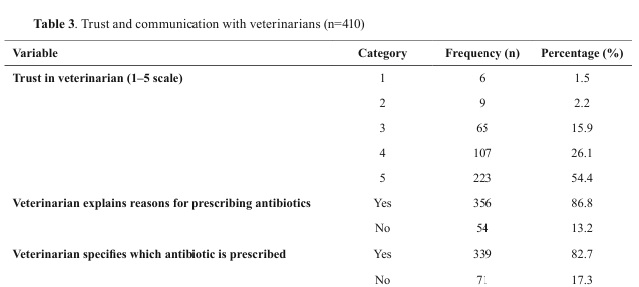
Trust in veterinarians was generally high, with 54.4% assigning the maximum trust score (5) and 26.1% selecting a score of 4. The median trust score was 5 (IQR 4–5). A score of 3 was reported by 15.9%, while 3.7% selected scores 1–2.
Most respondents reported that their veterinarian explains the reasons for prescribing antibiotics (86.8%) and specifies which antibiotic is prescribed (82.7%), whereas 13.2% and 17.3%, respectively, indicated that such explanations were not provided (
Table 3).
 Disagreement between owners and veterinarians and perceived responsibility for antibiotic prescribing
Most respondents (83.9%) reported no prior disagreement with their veterinarian regarding antibiotic therapy. Disagreement related to perceived unnecessary antibiotic prescription was reported by 12.4%, whereas 3.7% reported disagreement due to perceived failure to prescribe antibiotics when expected. Among respondents who experienced disagreement, 37.1% sought a second opinion, 42.9% did not, and 20.0% considered seeking one but did not pursue it.
The majority of respondents (88.3%) indicated that primary responsibility for appropriate antibiotic prescribing in companion animals lies with the veterinarian; 11.2% believed responsibility should be shared between the veterinarian and the pet owner, and 0.5% attributed primary responsibility to the pet owner alone.
Perceived contributors to AMR reflected a multifactorial understanding: 50.2% selected “all listed factors.” Among individual contributors, overuse of antibiotics was identified by 42.4%, inappropriate use by 32.9%, and shortening/ prolonging treatment duration by 11.0%.
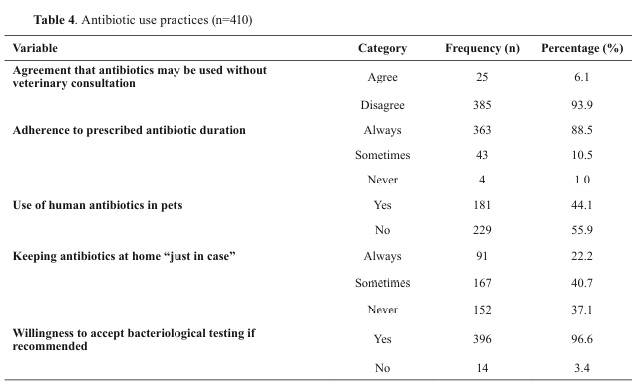
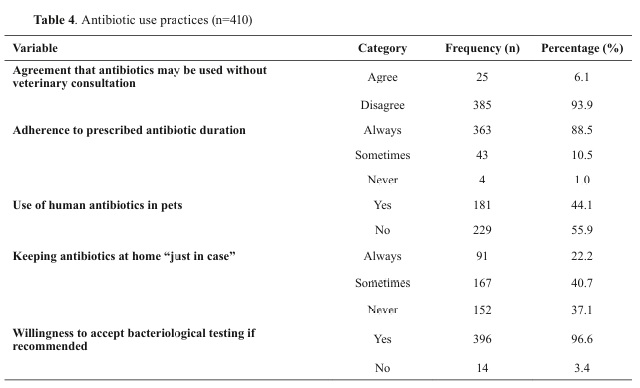
PracticesAntibiotic use behaviours and acceptance of diagnostic testingMost respondents reported always adhering to the prescribed duration of antibiotic therapy (88.5%), while 11.5% reported occasional or complete non-adherence. Most respondents (93.9%) disagreed that antibiotics may be used without veterinary consultation; however, 44.1% reported using antibiotics intended for human use in their pets. In addition, 62.9% reported keeping antibiotics at home “just in case”, either always (22.2%) or sometimes (40.7%). Willingness to accept bacteriological testing/AST if recommended by a veterinarian was high (96.6%), with 3.4% reporting refusal, as shown in
Table 4.
 Potential reasons for not accepting bacteriological testing/AST
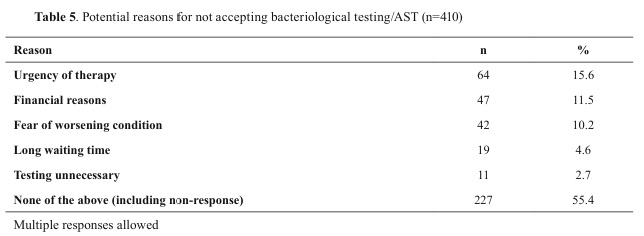
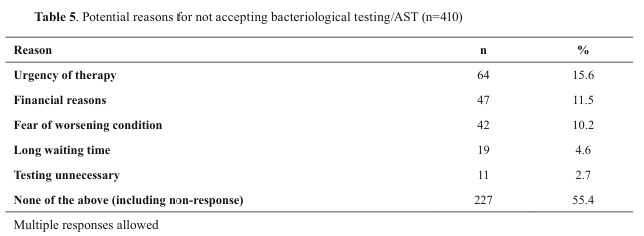
The optional question on potential reasons for not accepting bacteriological testing/AST allowed multiple responses. Aas the question was conditional on hypothetical non-acceptance of testing, respondents who did not answer this item were included in the “none of the above” category. Overall, 55.4% reported no potential reason for non-acceptance. Among the reported reasons, urgency of therapy was most frequent (15.6%), followed by financial reasons (11.5%) and fear of worsening clinical condition (10.2%). Less frequently reported reasons included long waiting time (4.6%) and considering testing unnecessary (2.7%) (
Table 5).
 Owner expectations regarding antibiotic prescription
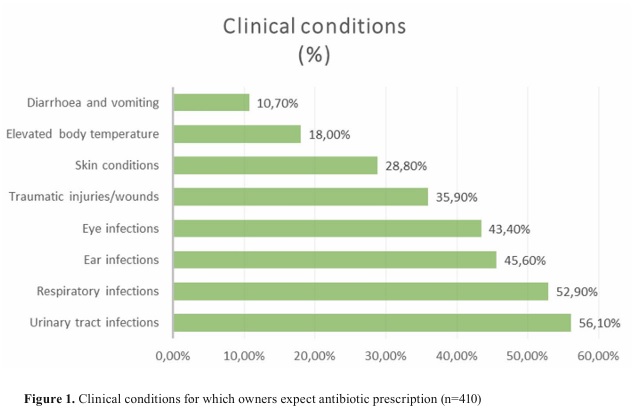
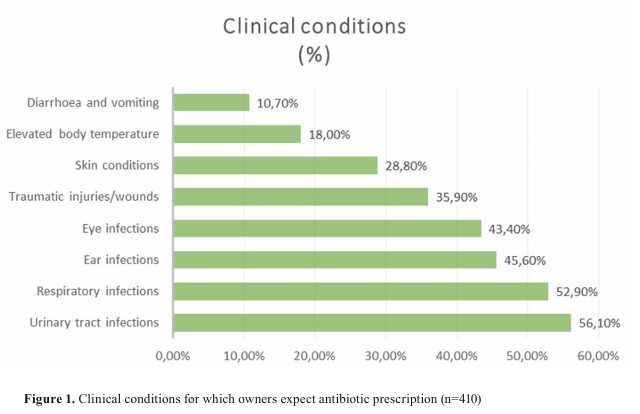
Respondents most frequently expected antibiotic prescription for urinary tract infections (56.1%) and respiratory infections (52.9%). Expectations were also commonly reported for ear infections (45.6%) and eye infections (43.4%). Notably, 36.1% of respondents selected “all of the above,” indicating broad expectations for antibiotic use across clinical conditions. Because multiple responses were permitted, the reported categories are not mutually exclusive. Responses are shown in
Fig 1.
 Factors associated with KAP-related outcomesDeterminants of correct knowledge of antibiotic effectiveness
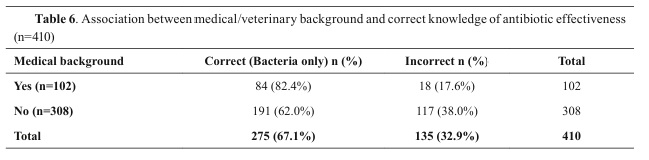
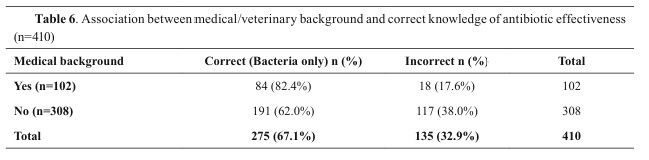
Medical/veterinary background was significantly associated with correct knowledge of antibiotic effectiveness (“bacteria only”) (χ²(1)=14.35, p<0.001; Cramér’s V=0.19), although the effect size was small. Respondents with a medical/veterinary background more frequently selected the correct response compared with those without such background (82.4% vs 62.0%) (Table 6). Recognition of AMR as a serious health challenge was also slightly more frequent among respondents with a medical/veterinary background (100% vs 95.1%; Fisher’s exact test, p=0.028; Cramér’s V=0.11), representing a small effect size (
Table 6).
 Determinants of transmission beliefs
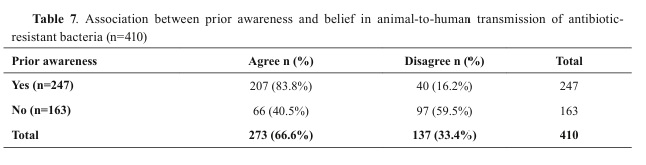
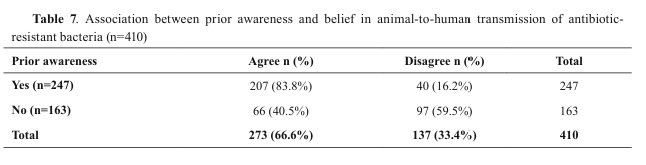
 Prior awareness of interspecies transmission was strongly associated with the belief that companion animals may represent a potential source of antibiotic-resistant bacteria transmissible between animals and humans (χ²(1)=80.87, p<0.001; Cramér’s V=0.44). Notably, 40.5% of respondents without prior awareness still agreed with the transmission concept. In multivariable binary logistic regression, prior awareness remained independently associated with transmission belief (aOR=7.83, 95% CI: 4.86–2.62, p<0.001), whereas AST knowledge was not associated after adjustment (p=0.633) (
Table 7). The model demonstrated adequate calibration according to the Hosmer Lemeshow goodness-of-fit test (p=0.185).
 Determinants of adherence to prescribed antibiotic duration
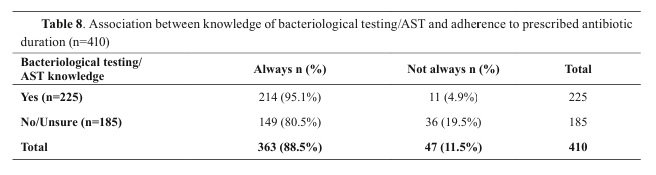
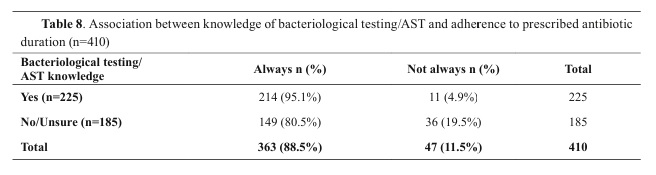
Adherence was dichotomized as “always” versus “not always”. Knowledge of bacteriological testing/AST was significantly associated with adherence (χ²(1) = 19.83, p < 0.001; Cramér’s V = 0.22), representing a small-to-medium effect size; and respondents familiar with bacteriological testing/AST were more likely to report always adhering to the prescribed duration than those without such knowledge (95.1% vs 80.5%) (
Table 8).
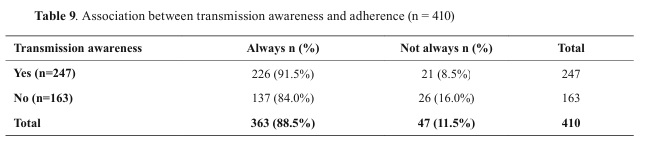
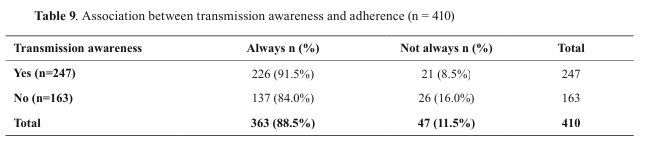
Prior awareness of interspecies transmission was also associated with adherence (χ²(1)=4.66, p=0.031; Cramér’s V=0.11), though with a small effect size (
Table 9). Trust in veterinarians did not differ between always adherent and not-always-adherent respondents (median [IQR] 5 [4–5] vs 4 [4–5]; Mann–Whitney U=9244, p=0.302).
In multivariable binary logistic regression including knowledge of bacteriological testing/AST, prior awareness of interspecies transmission, belief in animal-to-human transmission, age group, medical/veterinary background and trust in veterinarians, knowledge of bacteriological testing/AST remained independently associated with adherence (aOR=3.69, 95% CI: 1.64–8.33, p=0.002). The model demonstrated adequate calibration according to the Hosmer–Lemeshow goodness-of-fit test (p=0.373).
 Determinants of permissive attitudes toward unsupervised antibiotic use
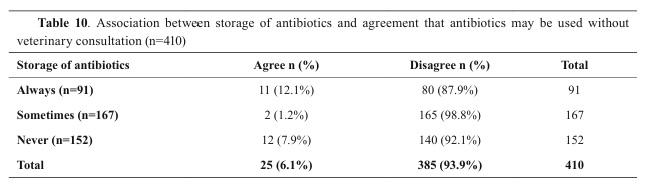
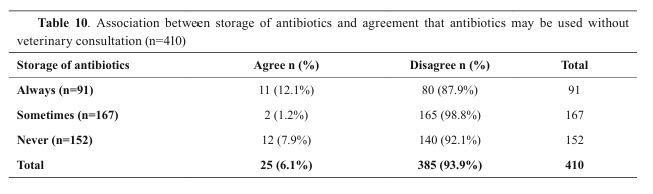
Agreement that antibiotics may be used without veterinary consultation was associated with keeping antibiotics at home (Fisher’s exact test, p=0.002; Cramér’s V=0.17). Respondents who reported always keeping antibiotics at home were more likely to agree with unsupervised use (12.1%) compared with those who reported sometimes (1.2%) or never (7.9%) storing antibiotics (
Table 10).
In multivariable binary logistic regression including storage of antibiotics and use of human antibiotics, keeping antibiotics at home remained independently associated with permissive attitudes toward antibiotic use without veterinary consultation (aOR=6.39, 95% CI: 1.46–27.88, p=0.013). The model demonstrated adequate calibration according to the Hosmer–Lemeshow goodness-of-fit test (χ²=0.15, p=0.700).
 Age group differences
To explore potential age-related differences, respondents aged 18–34 years were compared with those aged ≥35 years. Younger respondents were less likely to report knowledge of bacteriological testing/AST (48.6% vs 62.1%; χ²(1)=6.94, p=0.008; Cramér’s V=0.13) and less likely to report having used antibiotics intended for human use in their pets (39.1% vs 50.0%; χ²(1)=4.49, p=0.034; Cramér’s V=0.10). No significant age group differences were observed for adherence to prescribed antibiotic duration (p=0.691), storage of antibiotics at home (p=0.847), belief that companion animals may represent a source of antibiotic-resistant bacteria transmissible between animals and humans (p=0.141), prior awareness of interspecies transmission (p=0.423), or agreement that antibiotics may be used without veterinary consultation (p=0.388).
DISCUSSION This cross-sectional survey provides new evidence on pet owners’ knowledge, attitudes, and practices regarding AMU and AMR in companion animals in North Macedonia. Overall, respondents demonstrated high general awareness of AMR, with 96.3% recognizing it as a serious health challenge affecting humans, animals, and the environment. However, this general awareness did not consistently translate into stewardship consistent knowledge and practices (
18). Although 92.4% identified bacteria as the target of antibiotic therapy, only 67.1% selected bacteria as the sole correct answer, indicating that misconceptions regarding antibiotic activity against viruses and fungi remain common. Similarly, while 66.6% agreed that companion animals may serve as a source of antibiotic-resistant bacteria transmissible between animals and humans, prior awareness of interspecies transmission was reported by only 60.2% of respondents. Together, these findings suggest that broad recognition of AMR does not necessarily imply a detailed understanding of appropriate antibiotic use or transmission related risks.
Owner expectations and requests for antibiotic therapy have been identified as factors that may influence antimicrobial prescribing in veterinary practice (
18). In the present study, trust in veterinarians was generally high, and most respondents reported that their veterinarian explained the reasons for prescribing antibiotics (86.8%) and specified which antibiotic was prescribed (82.7%). In addition, most respondents considered the veterinarian to be primarily responsible for appropriate antibiotic prescribing in companion animals. These findings indicate that veterinarians remain the central and most trusted source of treatment-related information in small animal practice, consistent with previous research showing that strong veterinarian-client relationships, clear communication, and shared decision-making are key drivers of acceptance of AMU recommendations (
19). Data from Germany likewise showed high owner ratings of veterinarian communication on zoonoses and AMR, despite a gap between the information provided and the level of guidance desired by owners (
20).
However, trust in veterinarians does not necessarily preclude expectations for antibiotic therapy. Scarborough et al. (
21) reported that pet owners generally trusted veterinarians to act in their animals’ best interests, even when no medication is prescribed, whereas Redding and Cole (
22) found that many owners preferred their pet to receive antibiotics when the expected benefit of treatment was uncertain. This distinction is also reflected in our findings. Although respondents reported high trust and generally good communication with veterinarians, owner-reported expectations were not always aligned with antimicrobial stewardship principles. Specifically, 36.1% of respondents selected “all of the above” when asked about the clinical conditions for which they would expect an antibiotic prescription, suggesting that antibiotics may be perceived as appropriate across a broad range of clinical presentations, including conditions where they are not routinely indicated. Such expectations may contribute to pressure during consultations and to empirical antibiotic prescribing in small animal practice. This interpretation is consistent with findings from our previous national survey among small animal veterinarians in North Macedonia (
10), in which 45.6% reported occasional and 35.1% frequent owner requests for antibiotic therapy, while owner-administered antibiotic use prior to veterinary consultation was also commonly reported (>90.0% overall; 54.4% occasional, 38.6% frequent).
Household-level access to antibiotics and owner-mediated AMU appear to be important drivers of antimicrobial exposure outside veterinary oversight (
23). In the present study, although 93.9% of respondents disagreed with using antibiotics without veterinary consultation, 44.1% reported administering antibiotics intended for human use to their pets, and 62.9% reported keeping antibiotics at home “just in case.” Similar findings have been reported in a UK-based survey of cat owners, where 17.3% of respondents reported keeping leftover antibiotics for future use, supporting the view that household availability of antimicrobials may facilitate unsupervised use (
24). Together with findings from our previous survey among small animal veterinarians in North Macedonia (
10), these results suggest that owner-related influences on AMU may occur both during the prescribing encounter and after antibiotics become available in the household.
Keeping antimicrobials at home may facilitate treatment decisions outside veterinary oversight and promote more permissive attitudes toward unsupervised antibiotic use (
25). Similar patterns have been reported in a survey of Italian dog owners (
23), where 21% reported administering oral antibiotics without veterinary consultation, and among these respondents, 65% used leftovers from previous prescriptions. In our study, household antibiotic storage was significantly associated with agreement that antibiotics may be used without veterinary consultation (χ²=12.1, p=0.002; Cramér’s V=0.17), although the effect size was small. This association remained significant in multivariable analysis (aOR=6.4, 95% CI: 1.5–27.9, p=0.013), suggesting that household access to antimicrobials may be associated with greater acceptance of unsupervised antibiotic use.
The duration of antimicrobial therapy is an important component of appropriate AMU and antimicrobial stewardship (
26). In the present study, 11.5% of respondents reported occasional or complete non-adherence to the prescribed therapy duration. Similar behaviour has been reported in other pet-owner populations; in one study, 92.4% of respondents indicated that they would discontinue treatment once clinical improvement was observed (
27). This suggests that visible improvement may strongly influence owner decisions regarding treatment duration and highlights the need for stewardship-focused communication at the time of prescribing (
28).
Notably, knowledge of bacteriological testing/AST was associated with better adherence to the prescribed duration of therapy in our study and remained an independent predictor in multivariable analysis. Respondents who were familiar with bacteriological testing/AST were more likely to always complete the prescribed antibiotic course than those who were not. Although the effect size of this association was modest (Cramér’s V=0.22), the finding was consistent across bivariate and multivariable analyses, and may carry practical relevance in the context of stewardship. Although willingness to accept bacteriological testing when recommended by a veterinarian was high (96.6%), perceived urgency of therapy, financial constraints, and fear of clinical deterioration were identified as potential reasons for refusal. In clinical practice, such concerns may discourage diagnostic testing and favour empirical antimicrobial use in the absence of microbiological confirmation (
29). When clinically appropriate, bacteriological examination and AST can guide treatment adjustment, including de-escalation from empirical broad-spectrum therapy to a narrower spectrum antimicrobial (
26).
In addition to owner-reported AMU practices, recent microbiological investigations conducted in companion animals in North Macedonia have demonstrated a substantial prevalence of AMR among both commensal and clinical bacterial isolates. Multidrug resistance was identified in 50.0% of Escherichia coli isolates obtained from shelter dogs, with 15.2% confirmed as ESBL/AmpC producers (
30). Similarly, clinical Staphylococcus isolates from dogs showed multidrug resistance in 70.5% and methicillin resistance detected in 28.8% based on the presence of the mecA gene (
31). In this context, owner awareness of transmission risk becomes particularly important. In the present study, 60.2% of respondents reported prior awareness of interspecies transmission, and this was associated with the belief that companion animals may represent a source of antibiotic resistant bacteria transmissiblebetween animals and humans, with a moderate effect size (Cramér’s V=0.44). This proportion appears higher than that reported by Stein et al. (
32), who found that only 21% of pet owners considered antimicrobial use in pets to pose a risk to humans. Together, these findings suggest that owner awareness and owner mediated AMU practices are relevant not only to antimicrobial stewardship in companion animals, but also to the One Health risk of circulation and possible transmission of resistant bacteria between animals and humans (
11).
This study has several limitations that should be considered when interpreting the findings. Participation was voluntary, and recruitment was conducted primarily through online platforms and veterinary clinics, which may have introduced selection bias and may have favoured respondents who are more engaged with veterinary care or more interested in animal health. The study population was predominantly female (79.8%) and included a relatively high proportion of respondents with a medical or veterinary background (24.9%) which together with the convenience-based recruitment strategy, means that the findings may not fully represent the broader pet-owner population in North Macedonia. This may have contributed to the high levels of knowledge and AMR awareness observed in the study, as respondents with a medical/veterinary background demonstrated better knowledge of antibiotic effectiveness and more frequently recognized AMR as a serious health challenge. In addition, the findings were based on self-reported responses and may therefore be influenced by recall bias or social desirability bias, particularly for questions related to antibiotic use and treatment adherence. Finally, because of the cross-sectional design, the observed associations should not be interpreted as causal relationships.
These findings support the view that AMR is not solely a microbiological phenomenon, but is fundamentally driven by human behaviour (
33). Pet-owner knowledge, attitudes, and practices represent critical targets for antimicrobial stewardship efforts within a One Health framework. Addressing behavioural drivers of AMU, including expectations regarding antibiotic therapy, access to antibiotics at home, and treatment-related adherence, may contribute to more responsible antimicrobial use in companion animals. Improved veterinarian–client communication, owner education, and promotion of diagnostic testing may therefore represent important components of antimicrobial stewardship in small animal practice in North Macedonia.
CONCLUSIONIn conclusion, this study provides the first data on pet owners’ knowledge, attitudes, and practices regarding antimicrobial use and antimicrobial resistance in companion animals in North Macedonia. Despite high general awareness of AMR, important gaps remained in owner understanding and treatment-related behaviour. Reported expectations for antibiotic therapy, use of antibiotics intended for human use in pets, and storage of antibiotics at home suggest that pet owners may play an important role in shaping antimicrobial use in companion animals. These results support the need to include pet owners in antimicrobial stewardship efforts and to strengthen veterinarian–client communication and owner education in small animal practice.
CONFLICT OF INTERESTThe authors declare that they have no financial or non-financial conflict of interest regarding authorship and publication of this article.
ACKNOWLEDGMENTSThe authors gratefully acknowledge the pet owners who participated in this study by completing the questionnaire. We also thank the participating veterinary clinics for their cooperation in facilitating the recruitment of pet owners and the distribution of the questionnaire.
AUTHORS’ CONTRIBUTIONIC conceived and designed the study and supervised the manuscript writing. IS, EAP, and MN developed the questionnaire. IS drafted the manuscript and interpreted the results. AC conducted the statistical analysis. BC, JV, MN, MP, and BD contributed to data analysis and interpretation. MN, EAP, and LR participated in manuscript review and editing. All authors reviewed and approved the final version of the manuscript and agreed to be accountable for all aspects of the work.


 10.2478/macvetrev-2026-0026